


A sport for every size
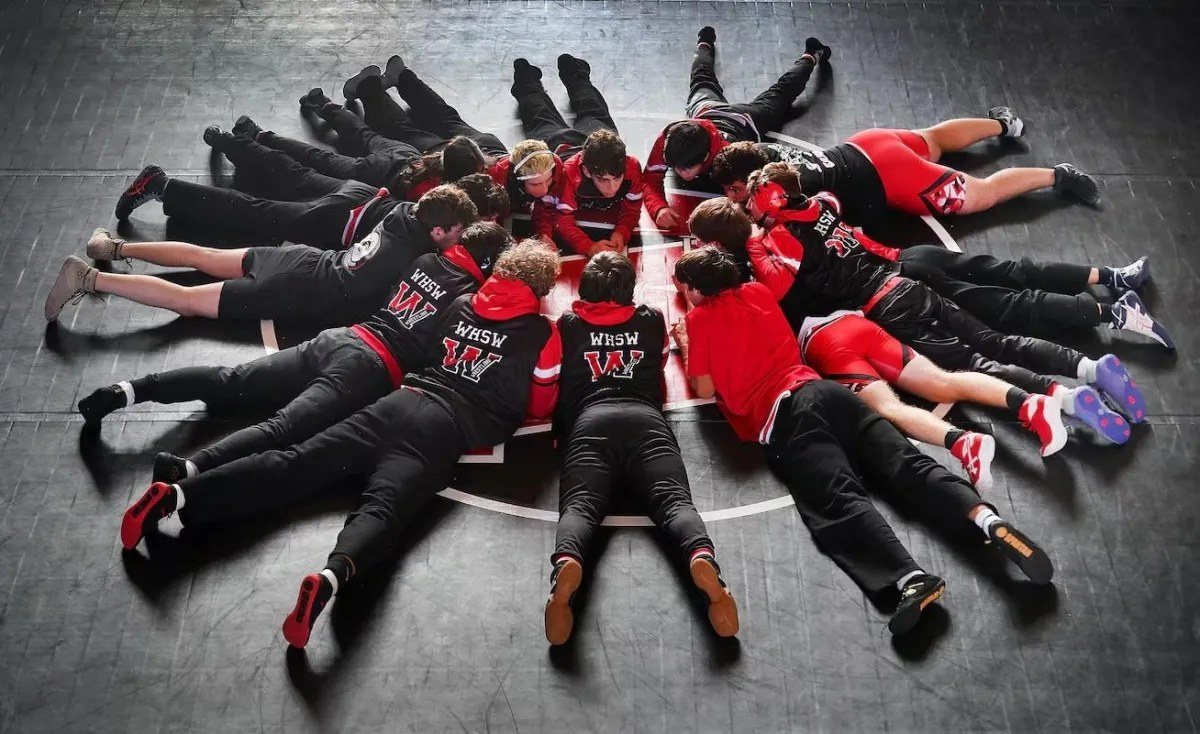
Wrestlers compete against kids their own weight, so a 106-pound freshman and a 285-pounder each have a place on the team. You don't need to be tall, fast, or experienced. You need to show up and work. Our coaches use wrestling to build five things that last well past high school:
“What the Winchester Wrestling team did for my son was remarkable. He gained so much self-confidence and resilience, traits that will be invaluable for college and beyond.”A Winchester Wrestling parent
Before the first practice
The winter season starts the Monday after Thanksgiving, in the WHS Wrestling Room. Practices are normally after school, Monday to Friday, until 6 PM. During the season, times can shift around midweek dual meets. Here is what to have done first.
Register with WHS
A parent or guardian registers your wrestler each season through ArbiterSports on the WHS Athletics website. Registration also serves as the school's consent form.
Physical and concussion steps
The school requires a current physical, arranged by your family through your own doctor and on file with the Athletic Office before the season starts. Physicals are good for 13 months. Wrestlers also complete the school's concussion requirements, including baseline testing, before the first practice. The Athletic Office announces testing dates.
Get the gear
Families are responsible for:
- Team singlet (purchased through the team)
- Wrestling shoes
- Headgear
- Mouth guard, if your wrestler has braces
Knee pads and other accessories are optional.
Join the parent list
Sign up for the newsletter at the bottom of our home page. Periodic emails share schedules, results and volunteer needs.
What new parents ask us
My student has never wrestled. Is that OK?
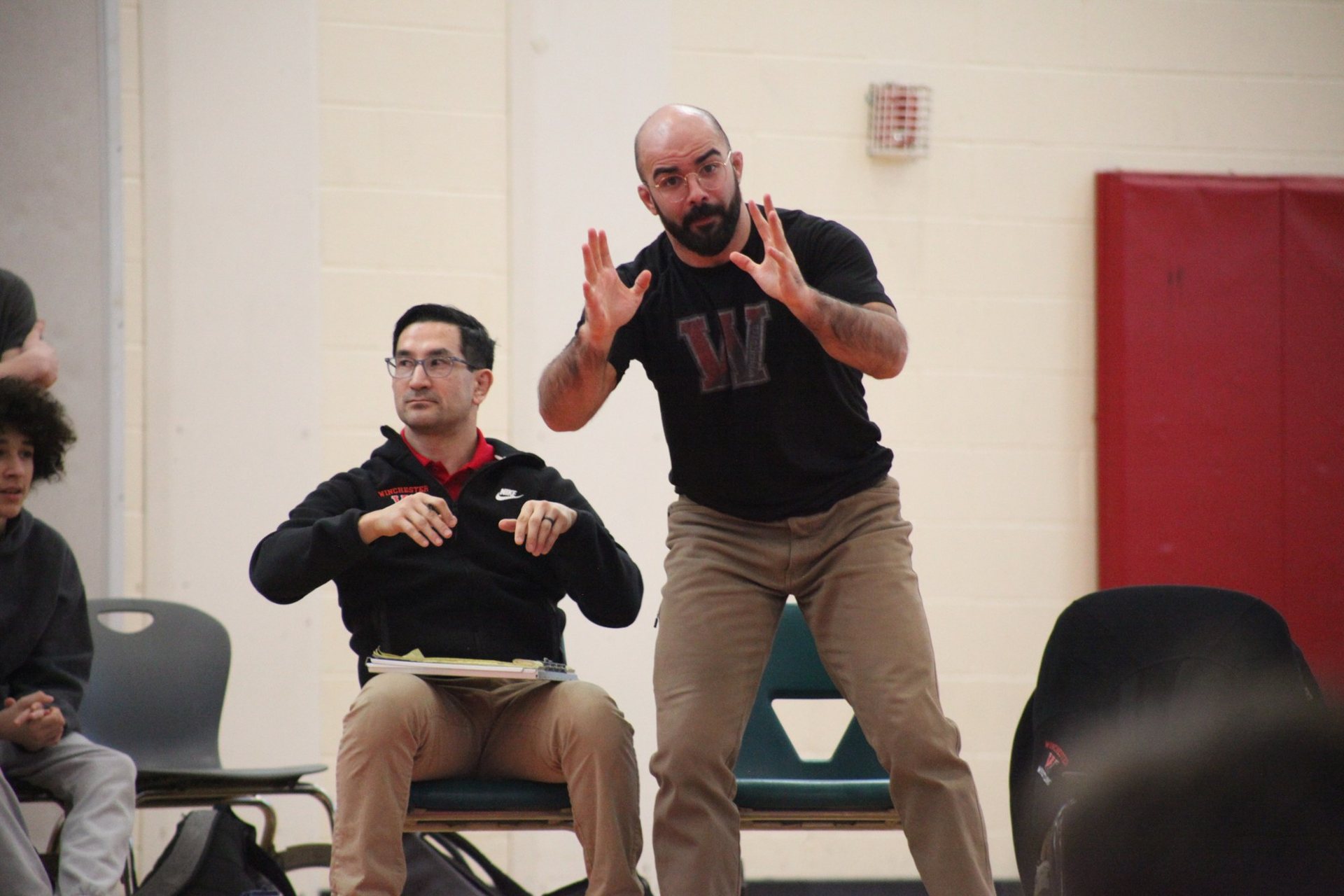
Yes. Wrestling is a no-cut sport at WHS, so every eligible student who signs up has a place on the team. Most of our wrestlers started in high school, and coaches teach from the basics. Beginners usually lose more than they win at first. That is normal, and the improvement over one season is often remarkable.
My kid is small (or big). Will they fit?
Weight classes run from 106 to 285 pounds, so wrestlers face opponents their own size. Every body type has a spot.
Do girls wrestle?
Yes. Girls' wrestling is one of the fastest-growing high school sports, and Massachusetts holds a girls' state tournament. Ask Coach Errico about our program.
Is wrestling safe?
Every match has a referee whose first job is safety, dangerous holds are illegal, and wrestlers only face kids of the same weight. Skin infections are the most common issue, and the routine above prevents most of them.
Will my wrestler have to cut weight?
Most new wrestlers compete at or near their natural weight. Where a wrestler lands depends on their body, the lineup and their own goals, and those decisions are made together with the coaches and the family.
Any weight change is planned with the coaches, at a safe pace. Our coaches and athletic training staff put the health of every student athlete first. Please talk with the coach before your wrestler changes how they eat.
Ringworm sounds scary. How common is it?
Common, and very treatable. It is a surface fungus. Showering right after practice, clean gear and daily skin checks prevent most cases. If you spot one, see your doctor early and tell the coach.
Where do I find the schedule and results?
The Schedule page on this site syncs with the team calendar. Results and photos go out in parent emails and on Instagram and Facebook.
What is the Booster Club?
Wrestling parents and alumni who raise money and volunteer for the team. We fund mats, conditioning equipment, gear and team events, and we host the Glen Doherty Memorial Tournament each December. Every family is welcome to help, in any amount of time you have.
How much time does it take?
Wrestling is an intensive commitment for both JV and varsity. Practice runs most weekdays after school from the Monday after Thanksgiving through February, plus meets and weekend tournaments. We are looking for wrestlers who want to be all in, and the effort pays off.
Can my wrestler train in the off-season?
Yes. Several local clubs run spring and summer programs for every level. See Clubs, Camps and Competition under Resources on this site.
From first whistle to final match
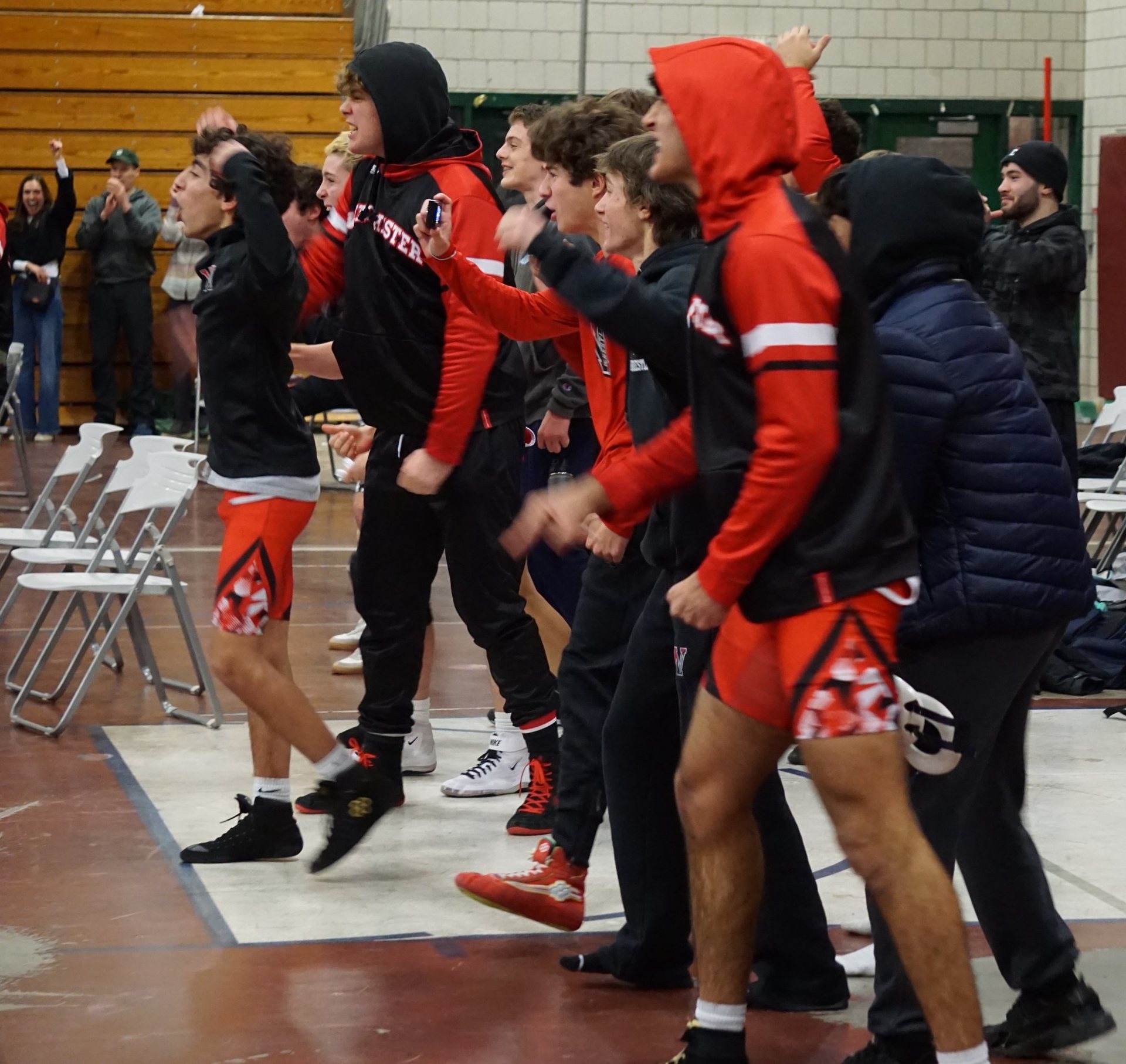
Dual meets are our team against one other school. Most are on weeknights and last about two hours.
Tournaments are usually on Saturdays and can go all day. Your wrestler might wrestle three to five times, with plenty of downtime in between. Each match is six minutes or less.
Brackets and mat assignments are posted on FloArena. Get the app and you'll know when your wrestler is up.
What to bring
Pack light food: fruit, yogurt, sandwiches, crackers, granola bars. Please leave nuts at home. Lots of teammates and gyms have allergies.
In the stands
Every match starts and ends with a handshake, and our families set the same tone in the stands. Cheer for our kids and clap for good wrestling on both sides.
Leave the coaching to the coaches and the calls to the referee. Officials can remove fans who cross the line. After a tough loss, keep it simple: "I love watching you wrestle."
Reading a match in two minutes
High school uses folkstyle. A match is three 2-minute periods. Each wrestler wears a red or green ankle band so the referee and scorer can track points.
Period one starts on the feet. For periods two and three, wrestlers take turns choosing to start on top, on bottom, or standing. The goal is to pin the opponent's shoulders to the mat. Short of that, the wrestler with more points wins.
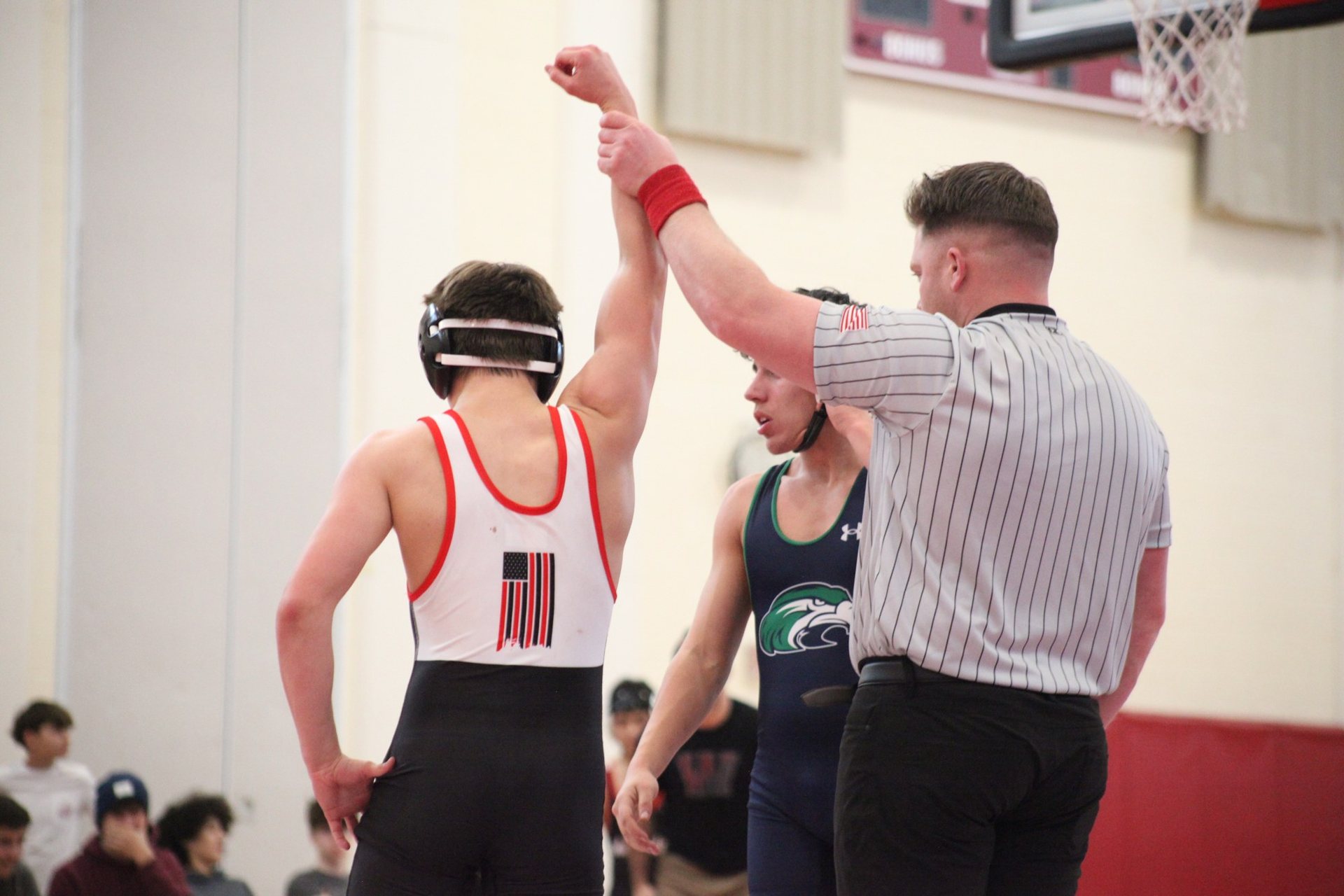
Watch the referee's hand. The color of the arm raised shows who scored, and the fingers show how many points.
Ways to score
How a match ends
It's a team score too
In a dual meet, each win adds team points. Bigger wins add more. That is why fighting off a pin matters, even in a loss: it keeps points away from the other team.
| Decision | 3 |
| Major decision | 4 |
| Tech fall | 5 |
| Pin, forfeit or default | 6 |
The 14 weight classes
A full lineup has one wrestler at each weight, in pounds:
Wrestlers weigh in shortly before each meet. After January 1, every class gets a small growth allowance.
Healthy skin, healthy season
Wrestling is close contact, and small scrapes let bacteria and fungus in. Skin infections are common in every program, and almost all of them are easy to treat when caught early. Good habits at home prevent most of them.
The daily routine
What to watch for
| Condition | What it looks like | What to do |
|---|---|---|
| Ringworm | A raised, itchy ring that grows outward. It is a fungus, not a worm. Often looks like a bug bite at first. | See the doctor for an antifungal. Wrestlers usually sit out at least 3 days of treatment before returning with it covered. |
| Impetigo / staph | Red sores or bumps that ooze or form a honey-colored crust. Boils that are warm and painful. | See the doctor promptly. Antibiotics are typical, with at least 3 days off the mat. Tell the coach so teammates can be checked. |
Before any competition, the referee checks every wrestler's skin. A wrestler with a suspicious spot needs a doctor's signed skin form to compete, so an early doctor visit protects your wrestler's spot in the lineup too.
Weight, the healthy way
Any change in weight class is planned with the coaches, at a safe pace. Crash dieting and dehydration are not part of our program.
- Most new wrestlers simply wrestle at the weight they are.
- Pack real food and a water bottle every day.
- After weigh-ins, rehydrate with an electrolyte drink, or water plus a salty snack. Plain water alone is not enough after heavy sweating.
- If something about weight worries you, talk to the coach.
Injuries and concussions
Every match is run by a trained referee whose first job is safety. Slams and dangerous holds are illegal and stop the match. The school's athletic trainers support the team.
- Headgear is required, to protect the ears.
- Wrestlers with braces must wear a mouth guard.
- Know the signs of concussion: headache, dizziness, confusion, light sensitivity. If you see them, the wrestler sits out until cleared.
- The Booster Club has funded new mats and conditioning gear so practice is safer and better.
We'd love to meet your family
Have a question, or a student who is curious? Reach out. No question is too basic, and every one of us was new once.
Contact us